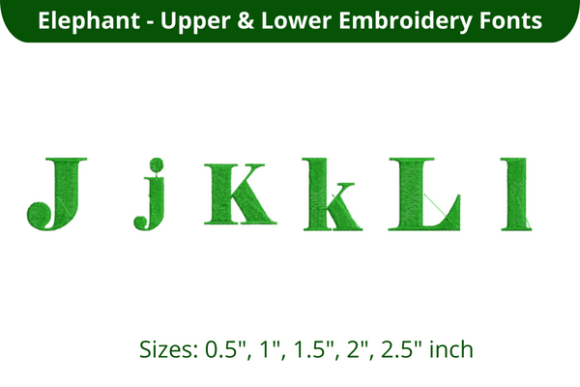
Elephant Font JKL: A Designer's Review for Branding
As a professional embroidery designer who has spent years refining designs for small business merchandise, I approach every new machine embroidery design with a critical eye. The goal is never just to make something look good on a screen; it is to ensure the design translates flawlessly into a physical product that builds trust and recognition. Today, I am reviewing Elephant Font JKL, a font categorized under Back To School but with potential applications far beyond the classroom. For owners of boutiques, cafes, bakeries, and handmade brands, selecting the right typeface is a strategic decision. This review explores how Elephant Font JKL performs in real-world commercial scenarios, from staff uniforms to custom patches.
First Impressions: Visual Personality and Professionalism
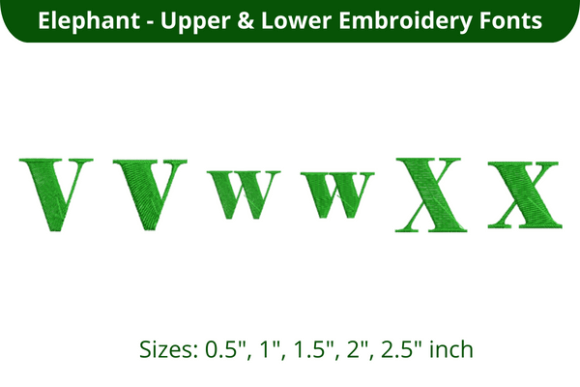
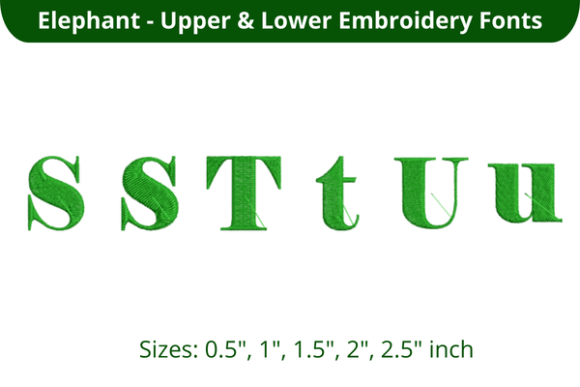
Upon opening the digital file for Elephant Font JKL, the first thing that strikes me is its character. The name suggests a playful, perhaps slightly rustic or whimsical aesthetic, which aligns perfectly with the Embroidery category often associated with creative studios and local businesses. In the world of branding, fonts carry weight. A font that feels too generic can dilute a brand, while one that is too obscure can confuse customers. Elephant Font JKL appears to strike a balance between friendly and distinct. It feels like a font designed to personalize names, dates, or short quotes, making it an excellent candidate for adding a human touch to corporate apparel.
For a small café or a boutique florist, this font could serve as a warm accent on aprons or tote bags, signaling a handmade, community-focused identity. However, for a more formal uniform requirement, such as a medical clinic or a high-end law firm, the playful nature might need to be tested carefully against the existing brand guidelines. The key question is whether the font elevates the perceived value of the finished product or distracts from it. In my experience, fonts with unique serifs or playful curves, like those implied by the "Elephant" moniker, work best when used sparingly as an accent rather than for long blocks of text.
Performance in Real Business Applications
The true test of any embroidery file is its versatility across different substrates and products. Let’s evaluate how Elephant Font JKL holds up in specific use cases common among Etsy sellers and merch creators.
- Custom Apparel and Staff Uniforms: For a bakery or a pet brand, placing a short slogan or a staff member's name on the chest of a polo shirt or the back of an apron creates immediate team cohesion. The font needs to remain legible at a distance. If the letterforms are too intricate, they may lose definition on textured fabrics like twill or canvas.
- Embroidered Patches: One of the most popular uses for specialty fonts is creating detachable patches. These can be sold as standalone items or attached to denim jackets, backpacks, and hats. Elephant Font JKL could define a brand's logo patch, provided the stitch density allows for clean edges. A well-defined patch adds a premium feel to small business merch.
- Cap Embroidery: Caps present a unique challenge due to their curved surface. Fonts must be able to wrap without distorting. If Elephant Font JKL has tall ascenders or complex details, it might require digitization adjustments to prevent puckering on the cap front.
- Tote Bag Design: Tote bags are a staple for eco-conscious brands. A large-scale application of this font on a canvas tote bag could serve as a walking billboard. The durability of the thread colors and the stability of the stitches are crucial here, as these bags undergo significant wear and tear.
Critical Considerations for Production
While the visual appeal of Elephant Font JKL is promising, a professional designer knows that production realities dictate success. There are several areas where caution is required before committing to a full run of commercial embroidery.
Stitch Density and Detail
Fonts with intricate details often suffer from high stitch density. If the letters in Elephant Font JKL have tight spaces or fine lines, they can become muddy if not digitized correctly. On dark uniforms, this is particularly risky; white thread in a dense area can show gaps or bleed through to the other side of the fabric. Always inspect the spacing between letters to ensure the needle does not pull the fabric excessively.
Fabric Texture and Stabilizer Use
The interaction between the font and the fabric texture is vital. A rustic font might look great on a heavy cotton tote but could get lost on a smooth, shiny polyester blend. When using this font on textured materials, a strong stabilizer is non-negotiable. Without proper backing, the unique shapes of the letters may distort, ruining the brand identity you are trying to establish.
Size Limitations
Not all fonts scale down well. If you intend to use Elephant Font JKL for tiny sleeve details or small product labels, you must verify that the design remains readable. Some decorative elements that look beautiful at 4 inches may disappear entirely at 1 inch. Always create a printable mockup at the actual size intended for production to check legibility before stitching.
Impact on Brand Identity and Customer Trust
In the competitive landscape of handmade goods and local services, consistency is key. Using a cohesive set of design assets helps customers recognize your brand instantly. Elephant Font JKL can contribute to a narrative of creativity and care. For example, a local bookstore using this font on bookmarks or tote bags reinforces a sense of whimsy and community. Conversely, if the font clashes with the rest of the brand's visual language, it can create confusion and reduce perceived professionalism.
Customer trust is built on the quality of the finished product. A poorly executed embroidery job—where threads are loose, the design is puckered, or the font is illegible—suggests a lack of attention to detail. By choosing a high-quality digital embroidery file and executing it with precision, you signal to your customers that your business values quality. This applies equally to event merch, customer gifts, and retail items.
Practical Designer Notes for Implementation
If you decide to incorporate Elephant Font JKL into your workflow, follow these practical steps to ensure a successful outcome:
- Test in Black and White: Before ordering expensive thread, run a test stitch in black on a scrap piece of the actual fabric. This reveals issues with density and coverage without the distraction of color.
- Check Hoop Size: Verify that the text fits within your standard hoop size. If the design requires re-hooping mid-stitch, alignment issues can occur, leading to a disjointed look.
- Review Thread Color Contrast: Ensure there is sufficient contrast between the thread and the fabric. Light fonts on light backgrounds or dark fonts on dark backgrounds often fail to communicate effectively.
- Confirm Licensing: As a business owner, it is critical to confirm the commercial licensing terms. Ensure the embroidery file grants you the right to use the design for unlimited production runs on sellable items. Never assume a personal license covers business use.
- Create Client Mockups: If you are working with a client, always provide a realistic printable mockup showing the font on the intended garment. This manages expectations and prevents costly rework.
- Compare with Other Assets: Place Elephant Font JKL next to your existing logos and graphics. Does it complement them? Or does it fight for attention? Visual consistency is the hallmark of a mature brand.
In conclusion, Elephant Font JKL offers a charming and versatile option for personalizing custom apparel and branded goods. Whether for a Back To School project, a boutique launch, or a seasonal promotion, its success lies in careful application. By respecting the limitations of the medium and prioritizing quality control, you can turn this machine embroidery design into a powerful tool for your small business. Remember, the best embroidery is not just about the design itself, but how it makes the customer feel when they hold the finished product in their hands.